


Environmental graphics, including murals, typography, logos, color systems, and large-scale signage, are appearing more frequently in K–12 schools. School administrators see them as a way to foster institutional pride and a sense of belonging. Like corporate brands, environmental graphics in educational environments communicate collective identity and aspirations. They signal values.
Schools often apply vinyl decals or wall wraps to interior surfaces after a project is finished. But environmental graphics inevitably have more impact if they are woven into a project from the start. During new construction and remodels alike, LHB introduces the topic of environmental graphics early in the design process, ensuring that the results are integrated into the architecture and interior design. We want them to feel intentional rather than improvised.
Daily reminders of connection
When graphic elements like mascot logos, school colors, inspirational slogans, and murals depicting famous alumni or community history are integrated into a building design, they become part of the everyday experience of students and visitors.
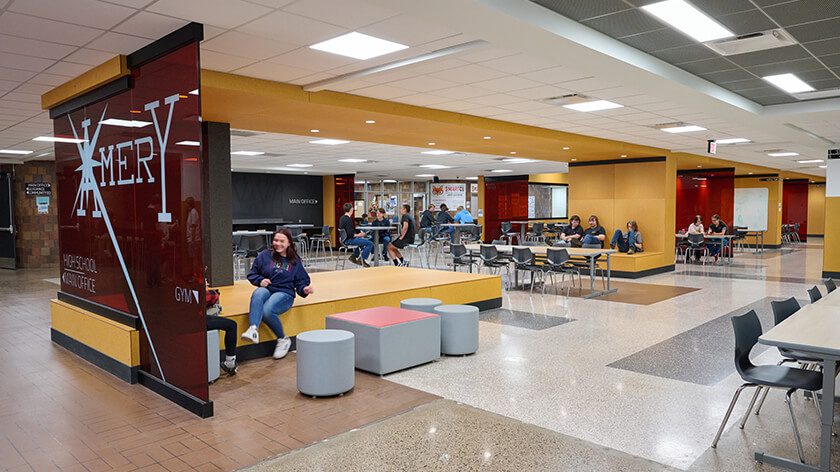
At Amery High School, for example, LHB leveraged environmental graphics in our creation of a new building commons. Within this open space, the school’s identity is embedded directly into the architecture. The word “Warriors” and the school’s logos, which reference its team names, are etched into laminated glass panels and composite wall surfaces. The school’s colors—red and gray—appear throughout the space in finishes and materials.
These graphics are integrated into the building design rather than applied as decoration. The result is a gathering space that immediately communicates identity. (The project also created an unexpected connection to the local community: The glass panels containing the logo were fabricated locally.)
Fostering a sense of belonging
School administrators frequently talk about school pride. Increasingly, they are also measuring something more specific: students’ sense of belonging. Many districts track belonging through surveys of students, particularly at the high-school level. When students report stronger feelings of belonging, schools often see improvements in student well-being and graduation rates.
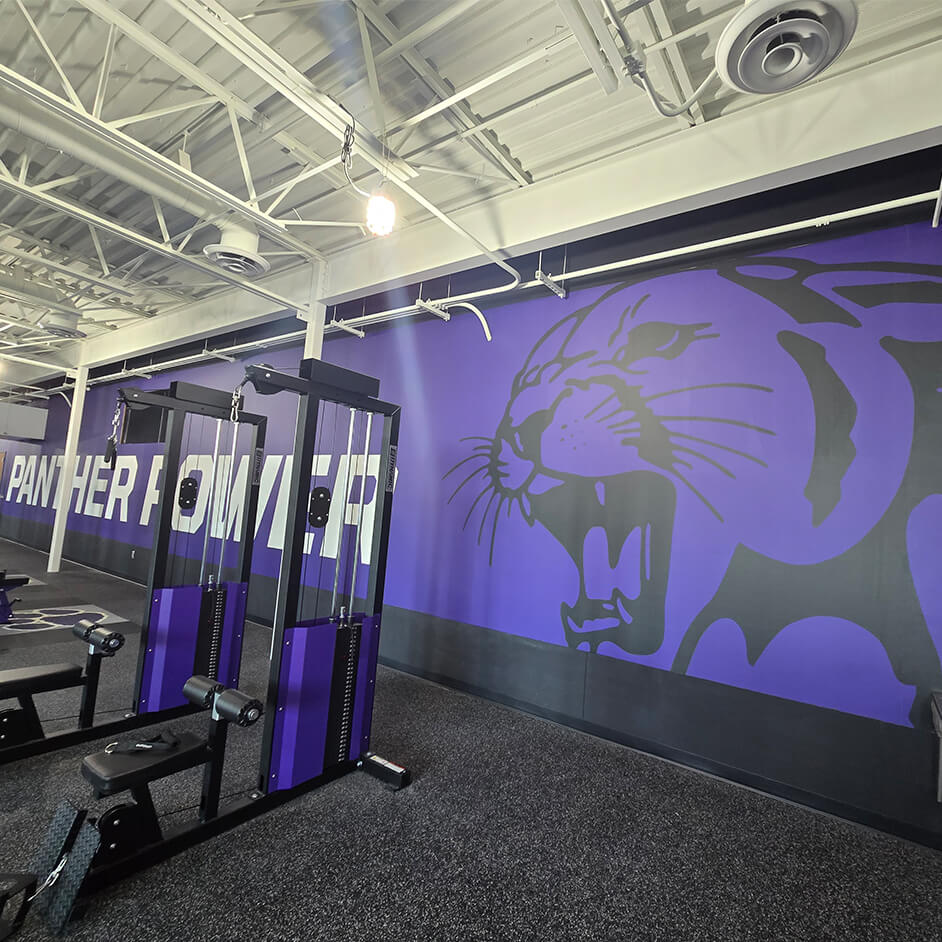
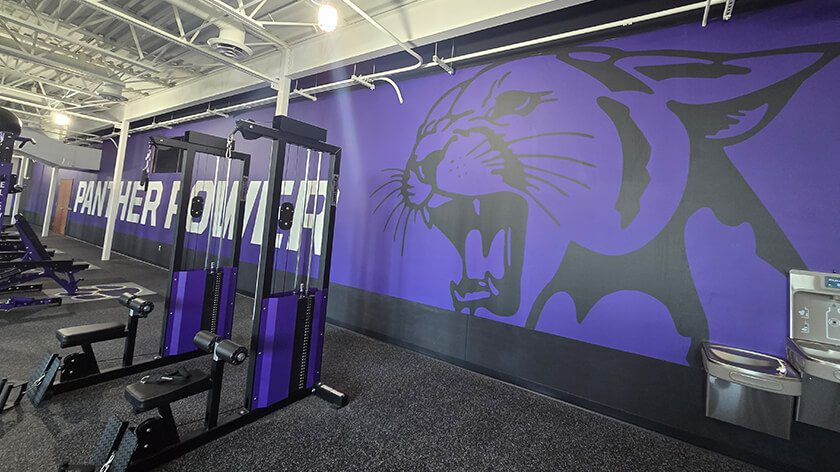
Environmental graphics can reinforce that sense of belonging by incorporating school colors and mascots, community history, local references, and phrases or values that define the school culture. At Ellsworth High School, our team energized a workout space with an enormous wall graphic that included the mascot (a panther) and the school’s motto (“Panther Power!”) and was done up in the school’s color, purple.
Helping students navigate spaces
Environmental graphics also serve a practical role in helping students and visitors find their way through a structure. Large schools often contain multiple wings and long corridors that can feel mazelike or indistinguishable. Graphics help organize these spaces, providing visual cues for improved wayfinding.
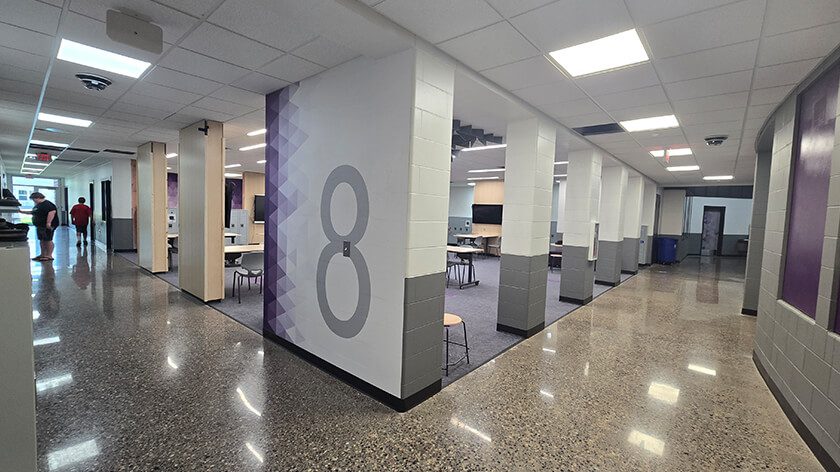
At Ellsworth Middle School, for example, our team renovated a dark locker corridor and converted it into a collaborative learning commons. A large “8” graphic marks the new eighth-grade wing, helping students identify the area while anchoring the space visually.
The renovation also extended the graphic language throughout the wing. Outdated finishes in randomly selected colors were removed and replaced with door wraps and patterned wall graphics that create cohesion. The school’s signature purple was used consistently throughout the renovation.
Clarifying identity through the design process
Identifying a school’s official visual identity can be a design challenge. Inconsistencies often abound. In our work with one client, our team discovered that the district had several different versions of its logo, and its usage varied widely.
Resolving those inconsistencies required several conversations with the district. Ultimately, the project team developed a simple one-page document identifying the school’s standard fonts, logo versions, and color specifications. The document was intentionally simple, providing a clear reference point that could guide future decisions about signage, graphics, and printed materials.
Environmental graphics are never the primary driver of a school building design, of course. But when they are thoughtfully integrated, they can add a vital and welcome layer to the overall impact: reinforcing school identity, aiding users as they navigate complex spaces, and helping communities see themselves as reflected in their schools. Ideally, that reinforces the sense of belonging. ∎
Interested in learning how environmental graphics can enliven your K-12 environment? Contact LHB K12 Studio Leader Anne Porter.