

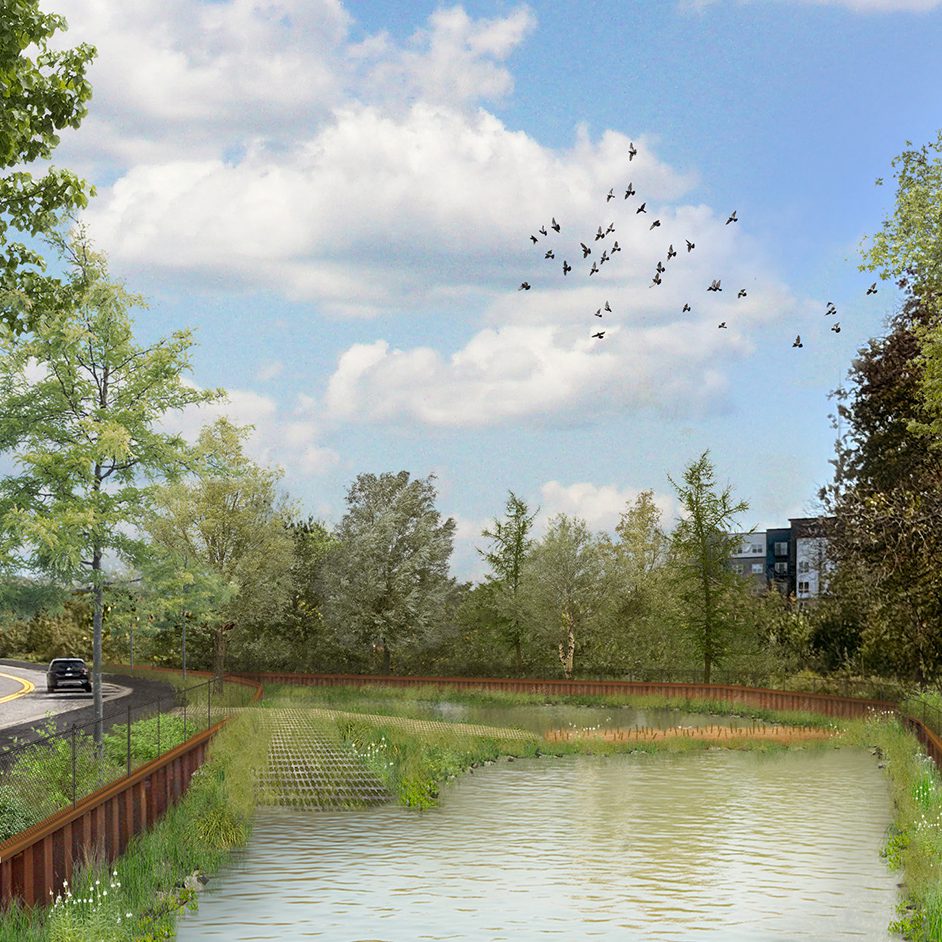


The first “smart pond” in Minnesota, designed by LHB in partnership with the City of Duluth, will help the city manage stormwater runoff. As climate-change-related flood events become increasingly common across the region, such infrastructure innovations are key to mitigating weather-related impacts using a smaller footprint.
What is a smart pond?
A smart pond looks like any other water-retention pond. Located in a low-lying area or connected to a municipal stormwater system, it collects runoff from roadways and local properties to reduce flooding and filter out pollutants prior to discharging to wetlands or waterways. In normal weather conditions, water flows out at a moderate and controlled rate and is absorbed downstream. When storms are forecast, a gate automatically opens, allowing water to exit through a dewatering pipe and lowering water levels in advance of incoming precipitation. This maximizes pond capacity for the incoming rain event.
What makes it smart?
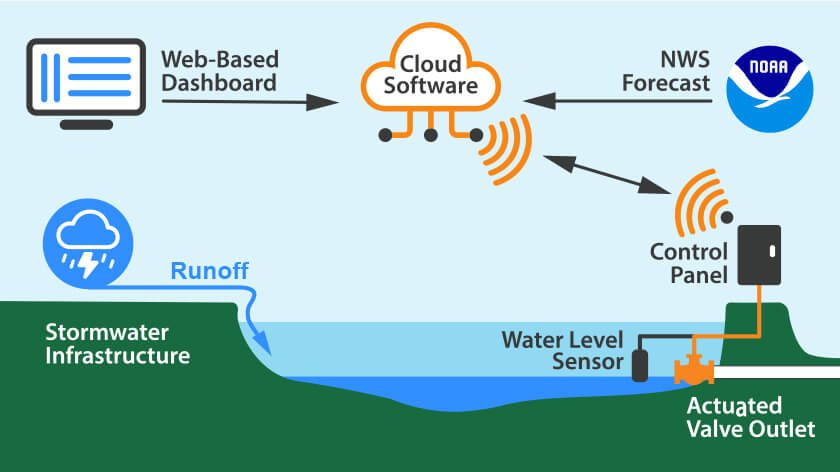
Cloud software and wireless technology are used to manage water levels at the pond. Forecast data and water-level readings taken by electronic sensors are synthesized by software programs that automatically control the outlet gate. A control panel at the pond relays messages between the pond and a centralized monitoring site.
Where is the smart pond in Duluth?
The smart pond will be located on Palm Street on the city’s northwest side. Water will exit the pond into Brewery Creek, which travels through a series of tunnels until it reaches Lake Superior.
How will the smart pond help with flood control in Duluth?
In recent years, Duluth has seen an unusual number of “once in a lifetime” flooding events, which can quickly overwhelm and damage the city’s century-old infrastructure. When the Palm Street retention pond reached capacity, water rapidly emptied into Brewery Creek and surged through the tunnels, causing significant damage to the infrastructure. Once the smart pond is constructed, water levels will be lowered via the dewatering pipe several hours before an anticipated storm event. This will increase pond capacity in advance of the storm. Outflows during and after the event will be controlled, reducing downstream flooding and property damage.
Doesn’t the pond just concentrate polluted water?
The pond is designed with a pretreatment structure, which captures floatables, and a forebay, where runoff flowing into the pond initially collects. Sediment within the stormwater settles to the bottom of the forebay prior to water flowing into the pond. Both structures are designed for easy access by maintenance crews charged with cleaning them. Within the pond, collected runoff is naturally filtered by plants and other living organisms. Ultimately, stormwater runoff is significantly cleaner when it leaves the pond and flows into Lake Superior.
Is a smart pond expensive?
Smart ponds are slightly more expensive to design and construct than traditional retention ponds, but they can also mitigate downstream infrastructure damage, reducing ongoing maintenance and repair costs. The Palm Street pond is being financed through the Minnesota Pollution Control Agency Implementation Grant for Stormwater Resilience and City of Duluth Stormwater Utility Fund. ∎
Curious about what a smart pond could do for your community? Contact LHB civil engineering manager Megan Goplin .

