


Biomass energy production is nothing new. For centuries, humans have used organic matter as a fuel source, burning crop residue, food scraps, animal waste and even algae to produce heat and energy.
In recent years however, concerns about sustainability and diversification of energy sources have prompted communities and companies alike to take a closer look at biomass. Biomass fuel sources are typically organic and renewable. Many are waste products that would otherwise be landfilled, releasing carbon or methane into the atmosphere as they decompose.
Wood chips are one potential biomass fuel that’s readily available and abundant in the Upper Midwest — a waste product of the region’s lumber and forest products industry. LHB has helped several clients conceive and build biomass facilities that turn wood chips into power, supplementing existing power sources and reducing overall dependance on power generated from non-renewable sources, like fossil fuels.
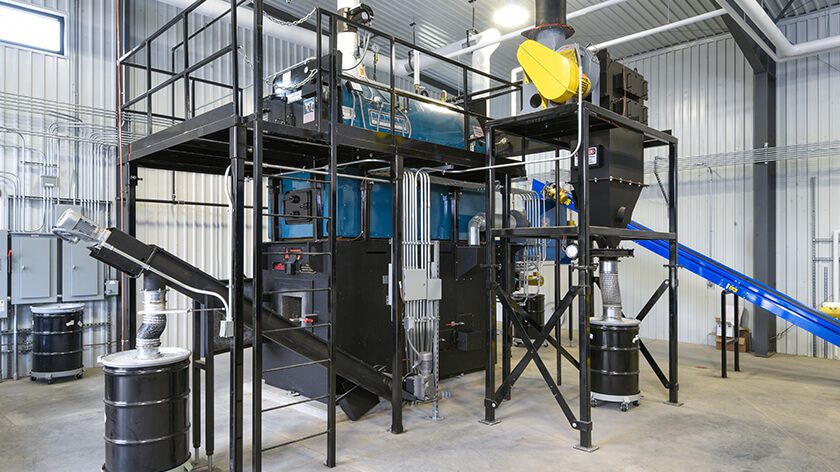
In June, the Fond du Lac Band of Lake Superior Chippewa began using a biomass boiler facility to meet the heating and hot-water needs at its community center in Brookston, MN. And a similar facility, also fueled by wood chips and designed by LHB, is slated to open on the Grand Portage Reservation in Minnesota’s Arrowhead region later this year.
Why wood chips?
For our tribal clients and others in northern Minnesota, wood chips are a readily available resource — a waste byproduct generated by lumber and wood-processing operations. Additional benefits include the following:
- If sustainably managed, forests can provide a continuous supply of chips for energy production.
- Burning chips eliminates financial and environmental costs associated with landfilling waste.
- Compared to some biomass fuels, wood chips burn more cleanly and generate more heat. Wood-biomass systems can produce electricity in units ranging in size from 5 kilowatts to 75 megawatts.
- Burning wood chips is often viewed as carbon neutral, as the CO2 released during production is offset by the carbon that’s absorbed by growing trees.
When woodchips or other biomass fuels are locally sourced, transportation costs are also reduced and local self-sufficiency increases.
Designed for impact
LHB has been involved in the design and construction of two biomass boiler facilities for the Fond du Lac Band. The first, in Sawyer, MN, opened in 2017. The Brookston facility began operations earlier this summer. Both facilities utilize wood chips that are locally sourced, either from the Band’s own forestry practices or from nearby operations.
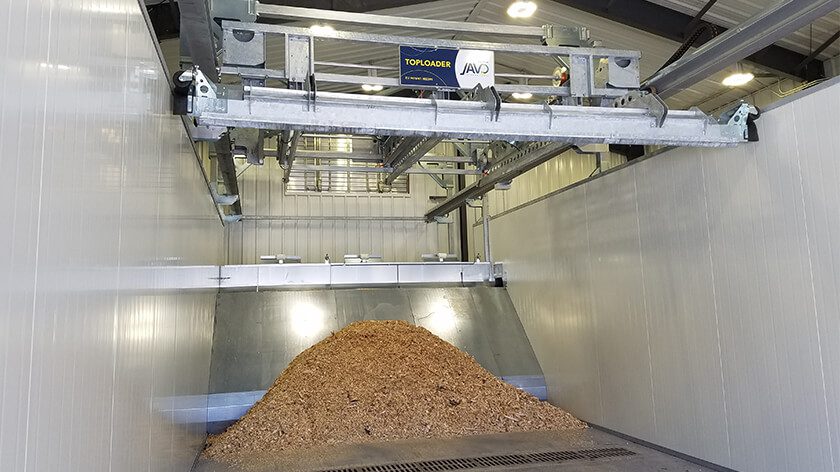
New LHB-designed buildings were constructed to house the operations, where wood chips are stored and dried. Ultimately fed into a boiler, the fuel produces hot water that is piped to the local community center, where the hot water serves as the primary source of both space heating and domestic hot water. The new biomass operation in Brookston is projected to reduce propane use by more than 16,000 gallons annually, saving the band more than $31,000 per year.
In addition to providing energy and reducing costs, the new biomass systems will help LHB’s clients meet their sustainability goals. The Brookston facility will lower CO2 emission by 116 tons annually. “This is a win on every level: economic, environmental, and cultural,” Bruno Zagar, an environmental specialist and energy projects manager with the Fond du Lac Band, says.
Investments in biomass position our clients to be leaders in sustainability. In a press release celebrating the opening of the Brookston facility, Arianna Northbird Himango, environmental programs manager for the Fond du Lac Band, noted, “This is one of the first biomass buildings created to sustain energy use for Band members. As a sovereign nation, we need to choose resources that work best to support our community and well-being for all.” ∎
Interested in learning more about LHB’s biomass work and other power and utility projects? Click here.

