
Stone Arch Bridge Preservation


Using Technology to Preserve History
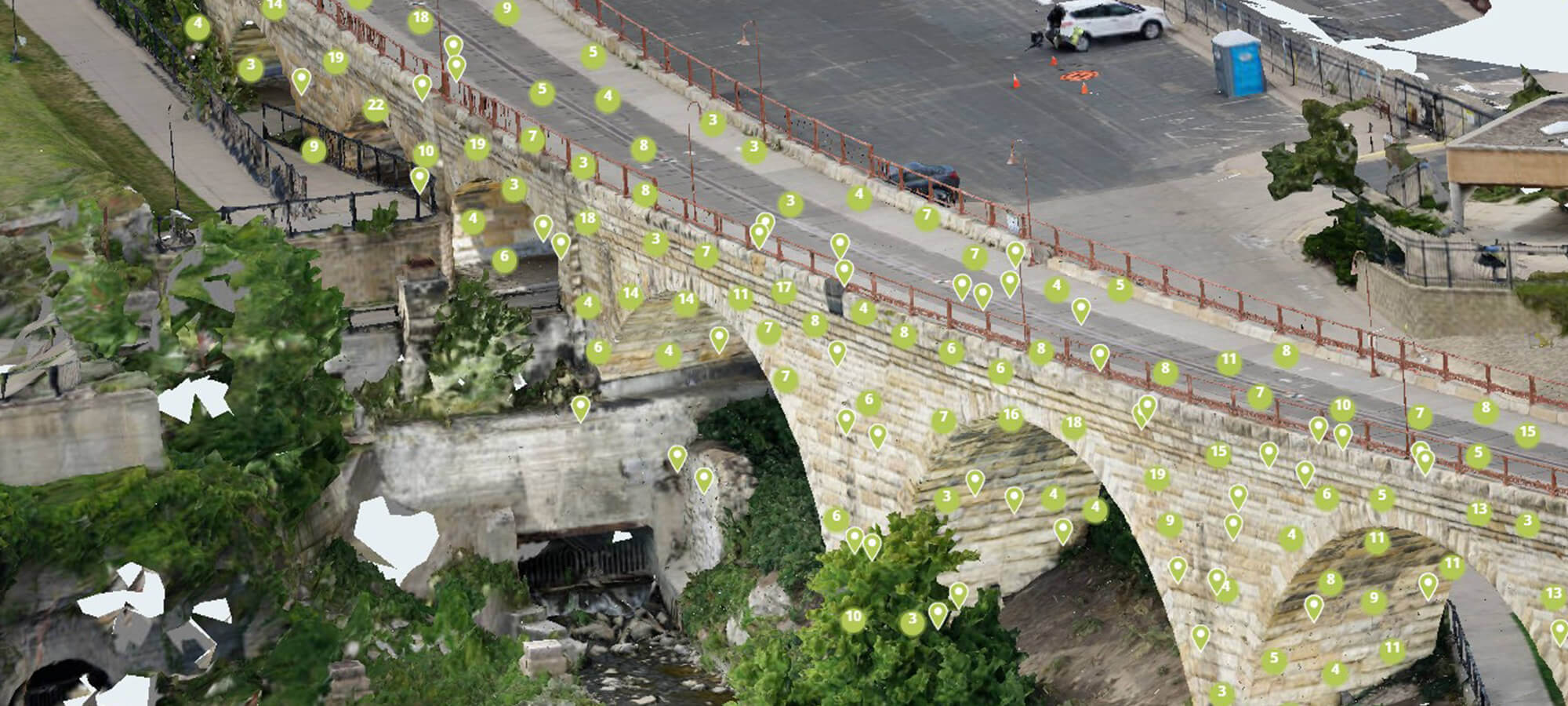
LHB led the assessment and rehabilitation design of Bridge 27004, Minneapolis’ iconic Stone Arch Bridge, built in 1883. A 2017 week-long inspection using MnDOT’s Under Bridge Inspection Units informed LHB’s detailed Condition and Rehabilitation Assessment Report outlining defects, quantities, and projected costs. In 2019, LHB assembled multidisciplinary team—Collins, HNTB, WJE, SRF, and Braun Intertec—to navigate SHPO and MnDOT CRU reviews and develop preservation plans. The team created a photorealistic model of the bridge using drone data and documented conditions directly to the model. Rehabilitation included underwater grouting and repointing at granite pier bases, full repointing of limestone arches and spandrel walls, and selective stone re-facing. The project showcased engineering precision, historic sensitivity, and collaboration to preserve a nationally significant structure.
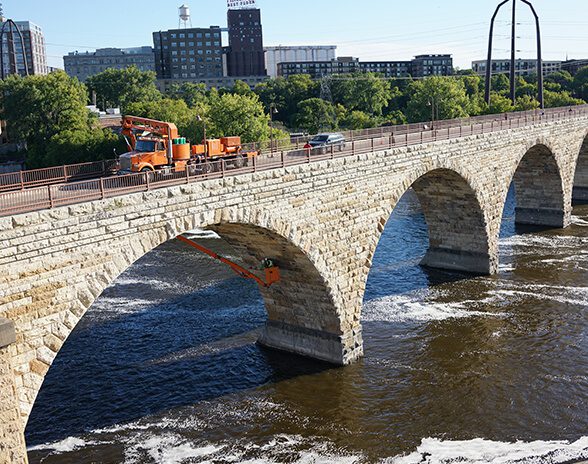
Minneapolis Icon
Spanning the powerful currents of the Mississippi River, the Stone Arch Bridge has been a proud Minneapolis icon since 1883. Constructed from more than 100,000 tons of regional granite and limestone, the bridge was marred with deteriorating stones and mismatched repairs. Two simultaneously designed plansets allowed flexibility of scope and helped construction commence on time.
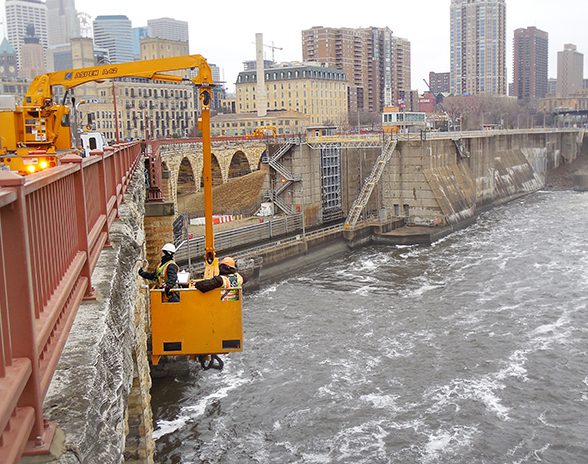
In-Depth Inspection
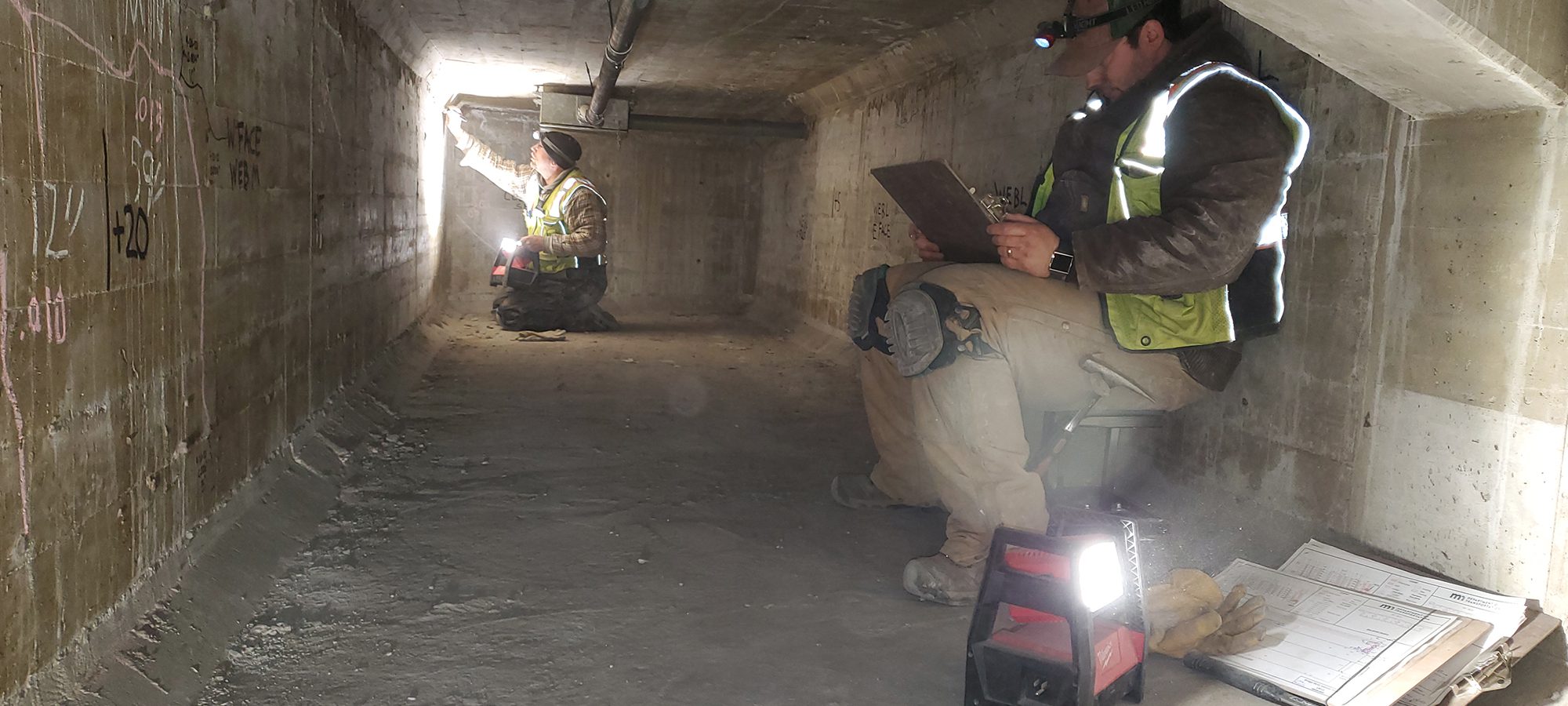
In 2017, Phase I began with LHB’s one week inspection using three snooper rigs and teams while keeping the bridge open. Findings showed the need for a more detailed inspection and preservation design, prompting MnDOT to seek funding and issue a Phase II RFP in 2019. Based on the 2017 results, LHB assembled a specialized team of subconsultants.
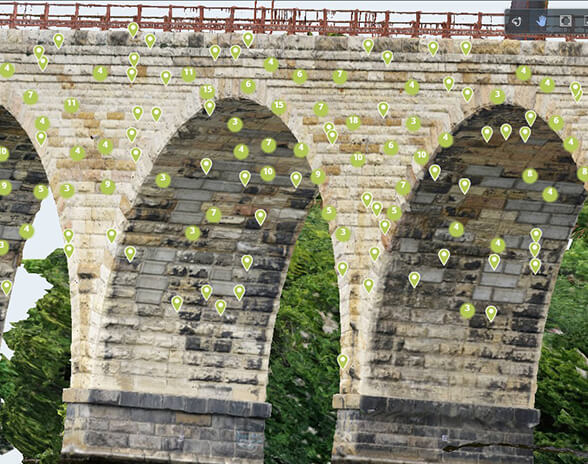
Digital Twin Model
Drone operators and hands-on inspectors documented the bridge’s 19,000 limestone blocks and 4,000 granite stones. Using iPads with cellular connections they logged real-time defect notes on a cloud-based GIS “digital twin” model to help engineers define the project scope, resolve conflicts remotely, analyze metadata for defects, guide repairs, and provide MnDOT with a future maintenance tool.
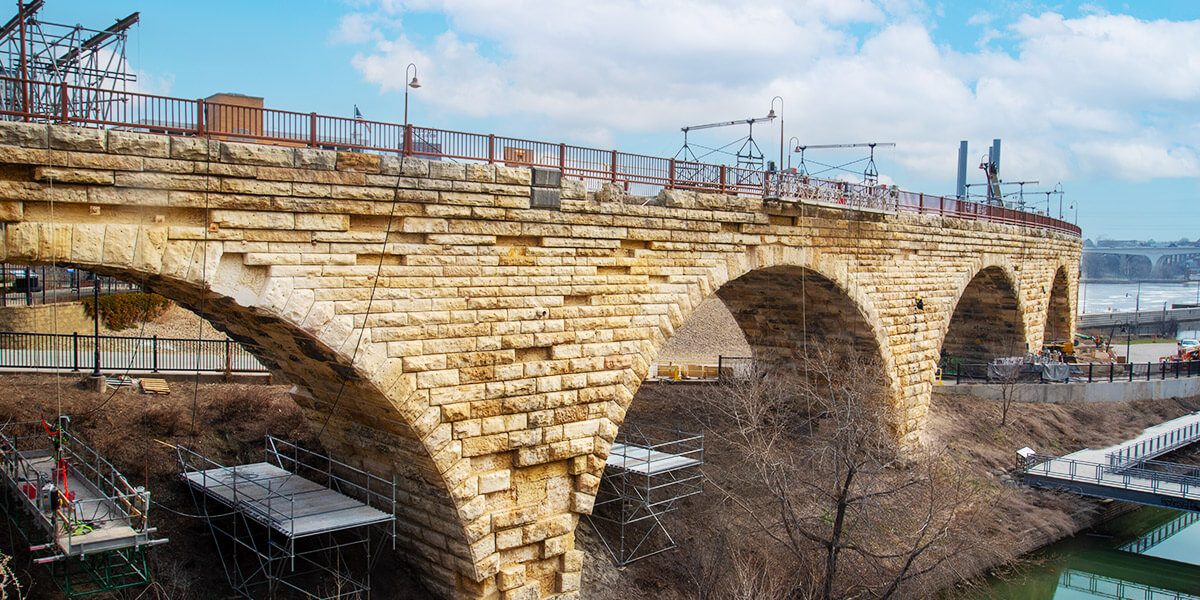
Stone Removal and Replacement
500 tons of deteriorated stone were removed and replaced. More than 21.4 miles of joints on the arch undersides were repointed. Over 867 individual stones, covering more than 7,000 square feet, required re-facing. Weather, terrain, and water turbulence made access to repair areas challenging.
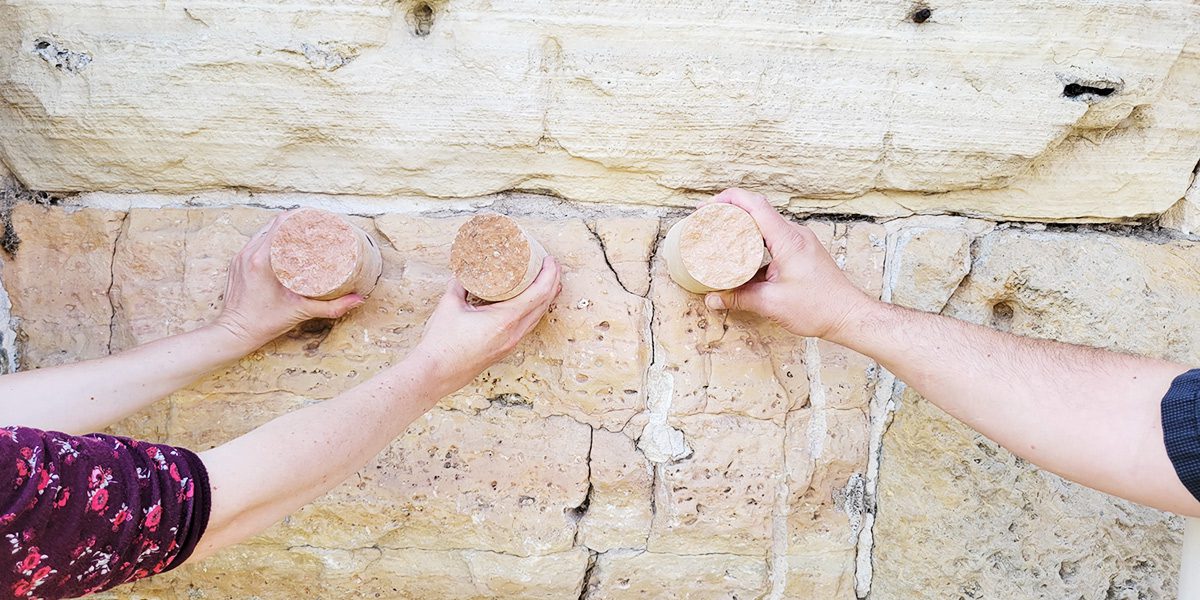
Choosing Stone Colors
To save time and ensure material availability and quality, the design team, not the contractor, specified the stone sources and colors for the bridge. During construction, the team reviewed 867 individual shop drawings for each stone that had to be cut and hand-tooled for final finishing.
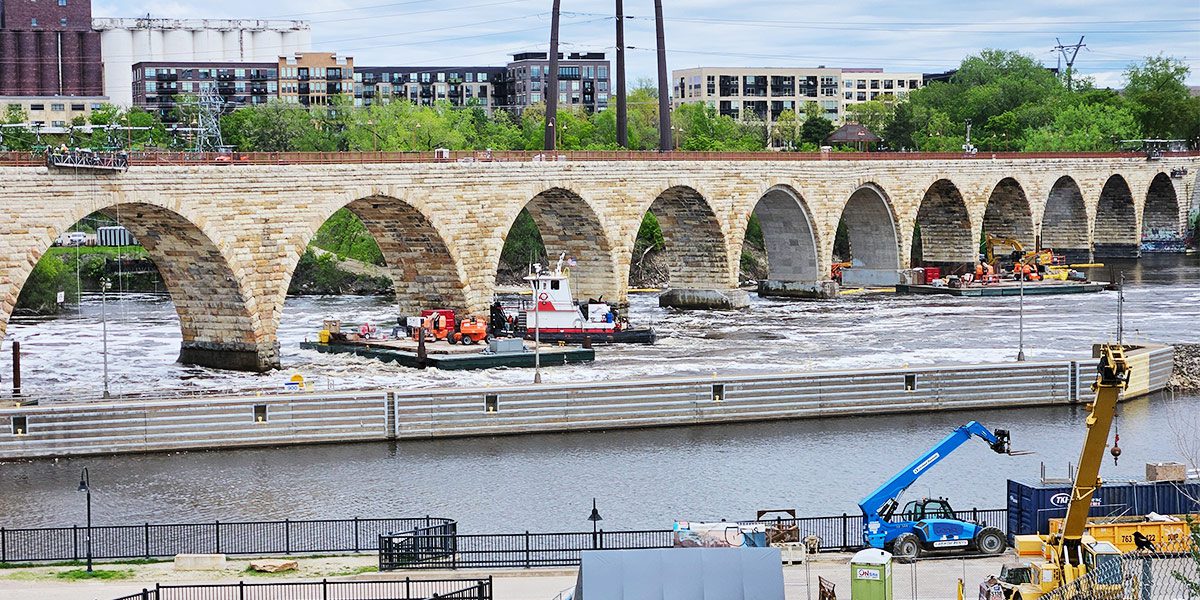
Access Beneath the Bridge
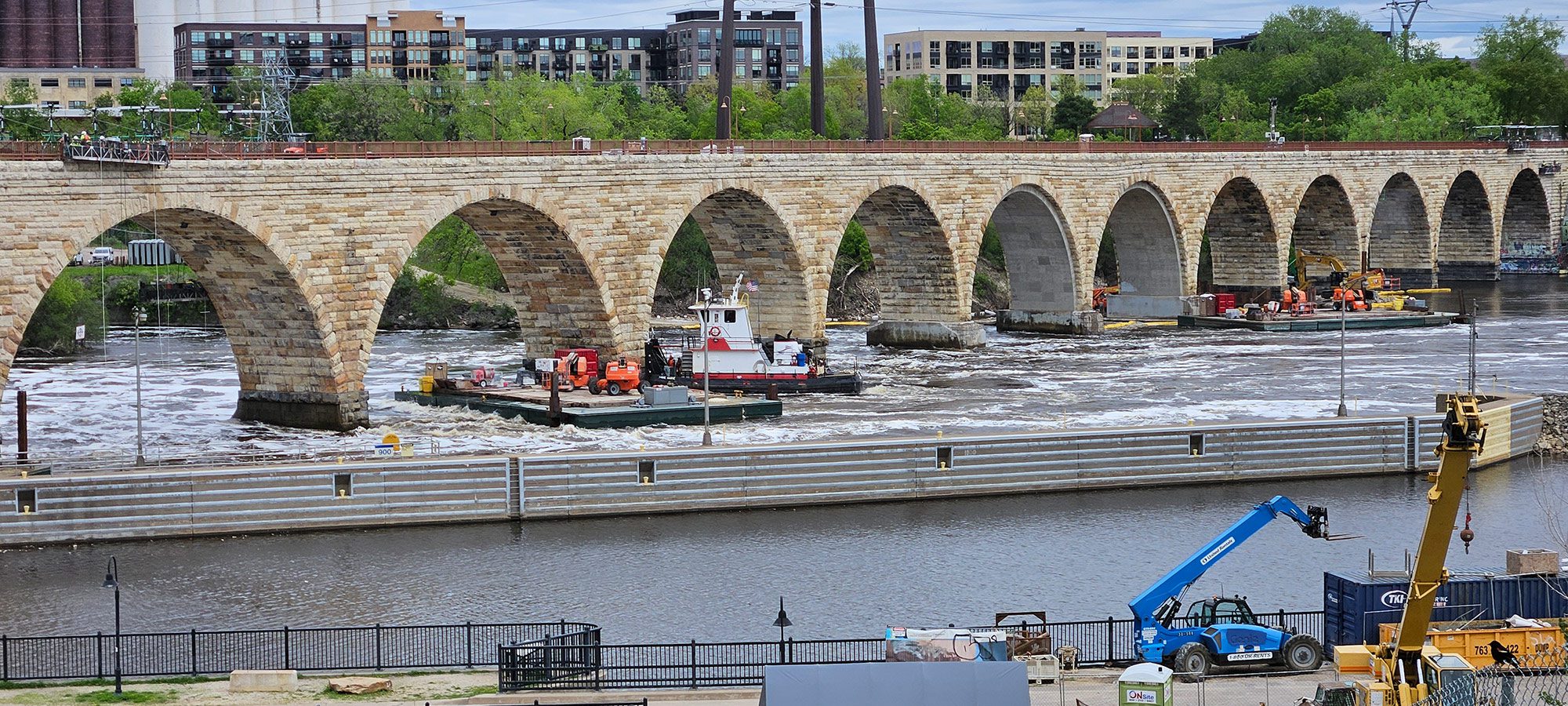
The team designed the project to allow for a causeway, flow deflectors, and cofferdams to help the contractor manage access to this challenging site. Barges served as platforms beneath the bridge while swing stages were installed on the bridge deck to provide access to the spandrel faces.
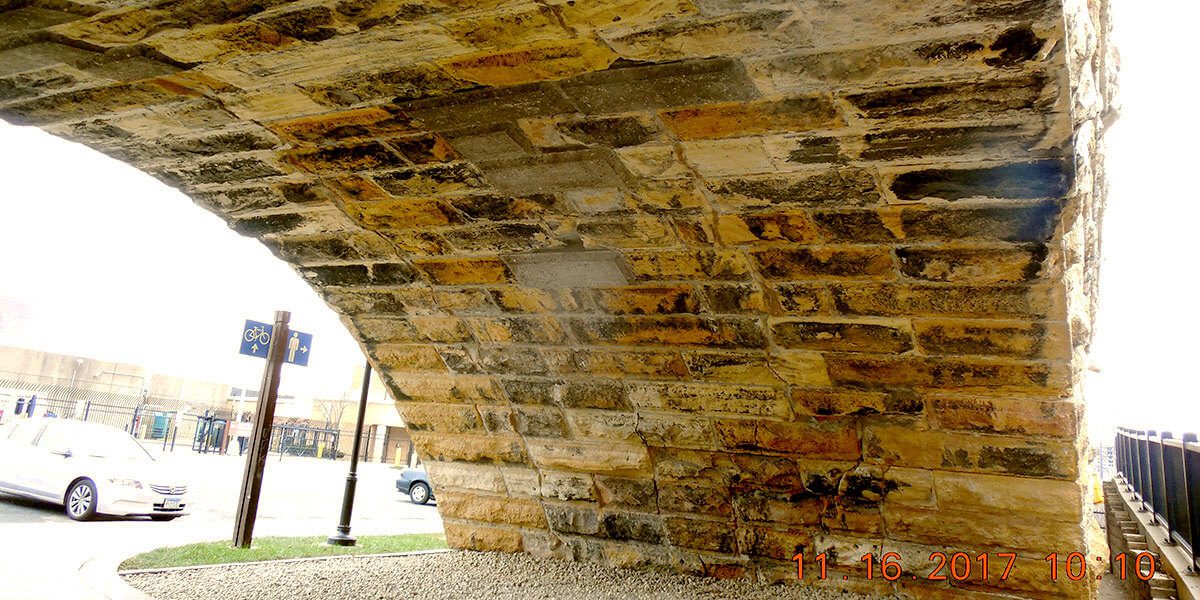
After Image of Span 22
Before image of the underside of Span 22 shows the deteriorating stones and mortar.
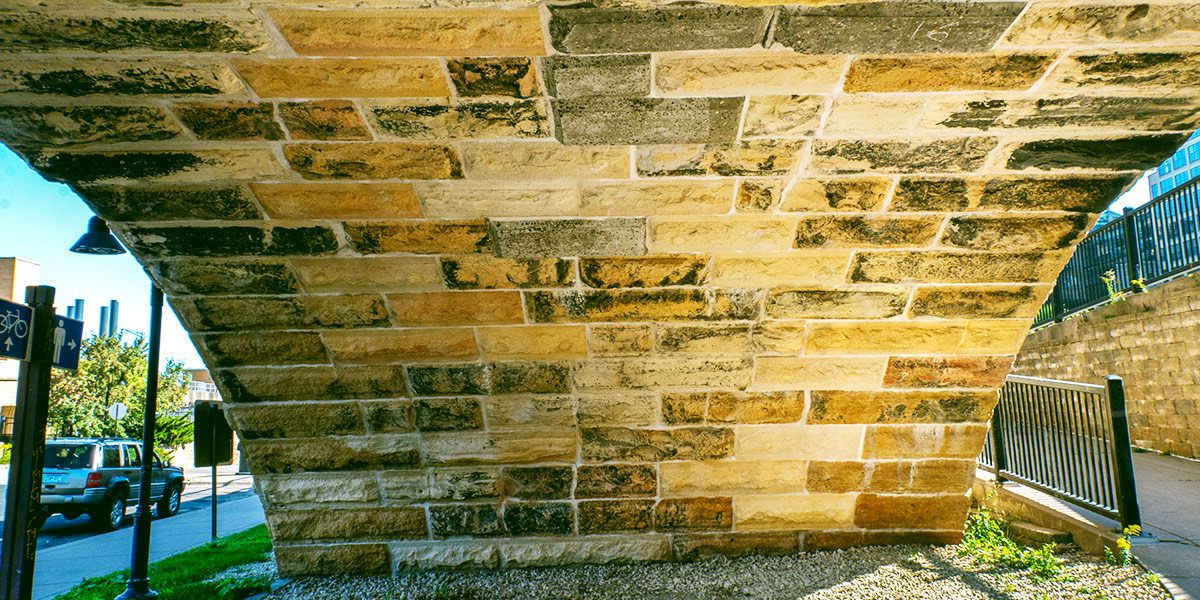
After Image of Span 22
After image of the underside of Span 22 with new mortar. Any replacement stones were sourced from two quarries that supplied stones for the original construction of Stone Arch Bridge ensuring material and color accuracy.

ACEC MN Grand Conceptor Award!
LHB celebrates winning the ACEC MN Grand Conceptor Award and the Twin Cities Excellence in Qualifications-Based Selection Award! The Grand Conceptor Award celebrates the most outstanding engineering achievement in Minnesota each year.