

Saint Paul Municipal Buildings Decarbonization Plan
Pathway to Carbon Neutrality
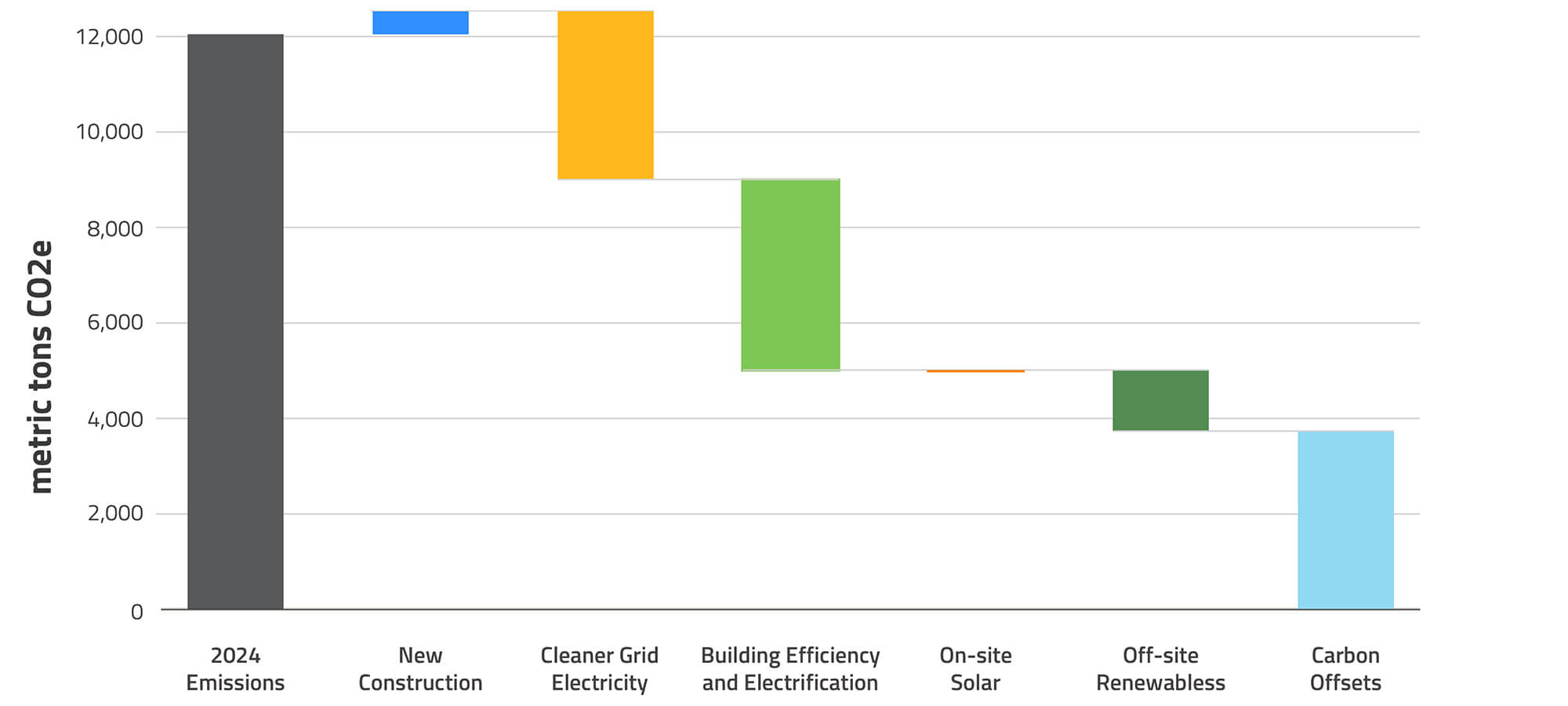
Leading by example, the City of Saint Paul is tackling the climate crisis with bold carbon neutrality goals for its operations. Its latest initiative — a comprehensive Municipal Buildings Decarbonization Plan authored by LHB — marks a critical step toward achieving carbon-neutral building operations by 2030. The plan outlines a clear strategy leveraging energy efficiency, electrification, renewable energy, and limited offsets to meet this ambitious target.
LHB’s climate solutions team conducted a detailed greenhouse gas analysis of city-owned buildings, revealing a 46% emissions reduction since 2015, driven by a cleaner electric grid, strategic facility closures, and energy-saving upgrades. Building on this progress, the City now has an actionable roadmap that includes tailored decarbonization plans for 11 high-use buildings, with prioritized improvements scheduled over the next five years. This effort demonstrates how data-driven planning and innovative design can accelerate climate leadership and create a sustainable future.
Understanding the Challenge
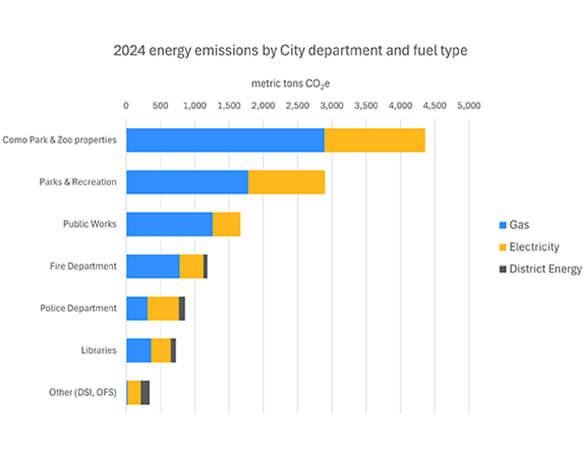
Saint Paul operates 150+ municipal buildings emitting over 12,000 metric tons of GHGs annually — equal to 2,500 homes. Nearly two-thirds of emissions come from natural gas for heating, with half concentrated in a few large sites. Targeting these facilities first enables rapid, cost-effective reductions on the path to carbon neutrality.
The Future is Electric
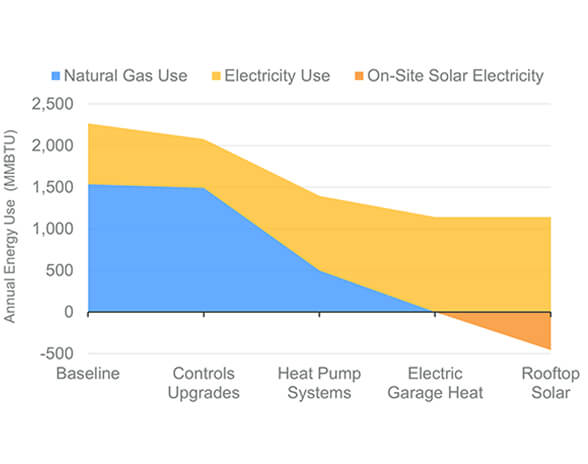
With many efficiency upgrades already in place, Saint Paul’s next step is electrification — replacing gas equipment with electric alternatives. Electric systems are more efficient and become cleaner over time as the grid transitions to renewable energy, making them a key strategy for achieving carbon neutrality.

Roadmap to Carbon Neutrality
By focusing on high-impact buildings and staying flexible as technologies evolve, Saint Paul can cut emissions, improve indoor air quality, and make public facilities more resilient to climate change. These efforts create a strong foundation for deeper progress — within City operations and across the community.