

Later this month, after nearly a decade of conversation, fundraising, and design work, Simpson Housing Services will open the doors to its new shelter and housing facility in south Minneapolis. The new Simpson Community Shelter & Apartments, a 66,000-square-foot building designed by LHB, replaces an ad-hoc emergency shelter started years ago in a church basement.
That basement space was never designed to support the daily realities of shelter operations or the ongoing needs of people staying there. Low ceilings, limited daylight, and constrained circulation were among the challenges.
The new building represents a turning point in shelter design. Rather than adapting a space never intended for shelter use, the project is purpose-built. The design is focused on providing users with safety, long-term stability, and — perhaps most important — dignity.
Goals shaped by staff and guests
From the outset, our design team understood that the most important insights would come from the people who know shelter operations best: staff and guests. Early and sustained conversations with both groups helped define the goals for the new facility, including:
- Greater privacy without sacrificing safety. Guests wanted more control over their personal space, while staff emphasized the importance of clear sightlines and supervision.
- Calmer sleeping environments. Noise, crowding, and constant disruption were recurring concerns in the former space.
- Secure storage and personal autonomy. People wanted reliable places for their belongings and the ability to manage small daily needs independently.
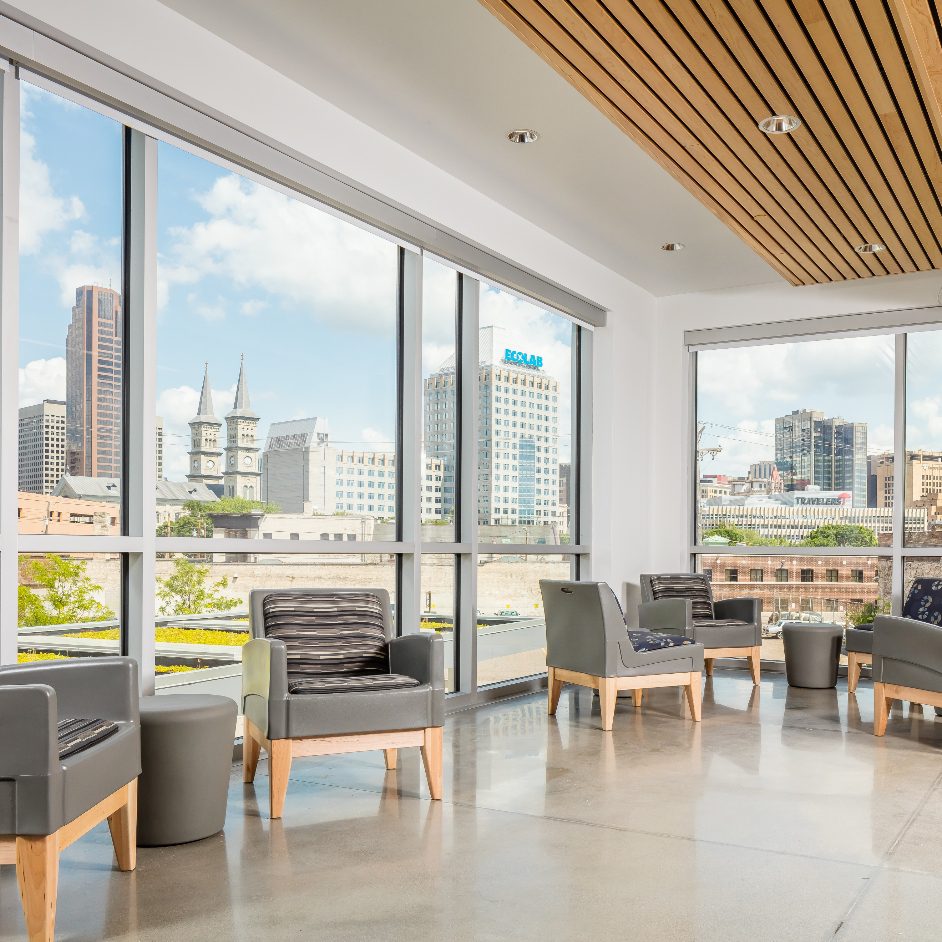
- Access to daylight and outdoor space. Natural light and fresh air were consistently identified as contributors to comfort and well-being.
These priorities were not abstract aspirations. They guided our team’s design decisions throughout the project.
One building, two connected missions
The new facility intentionally combines emergency shelter and permanent supportive housing under one roof. It includes two floors of shelter space with two additional floors of housing above, for a total of 72 shelter beds and 42 studio apartments.
This configuration supports a continuum of care. Shelter spaces address immediate needs, while the housing floors, which contain fully equipped studio apartments with kitchens, bathrooms, and living areas, provide stability for the long-term. Separate entrances for the shelter and housing help clarify boundaries and operations, but services and staff can be shared as needed. This integrated model demonstrates how shelter and housing can coexist in ways that benefit guests, residents, and staff.
How trauma-informed design shows up in the building
LHB’s expertise in trauma-informed design guided the project at every stage, from site planning to materials selection. Design elements that introduce comfort and foster a sense of calm and autonomy include:
- Smaller sleeping pods
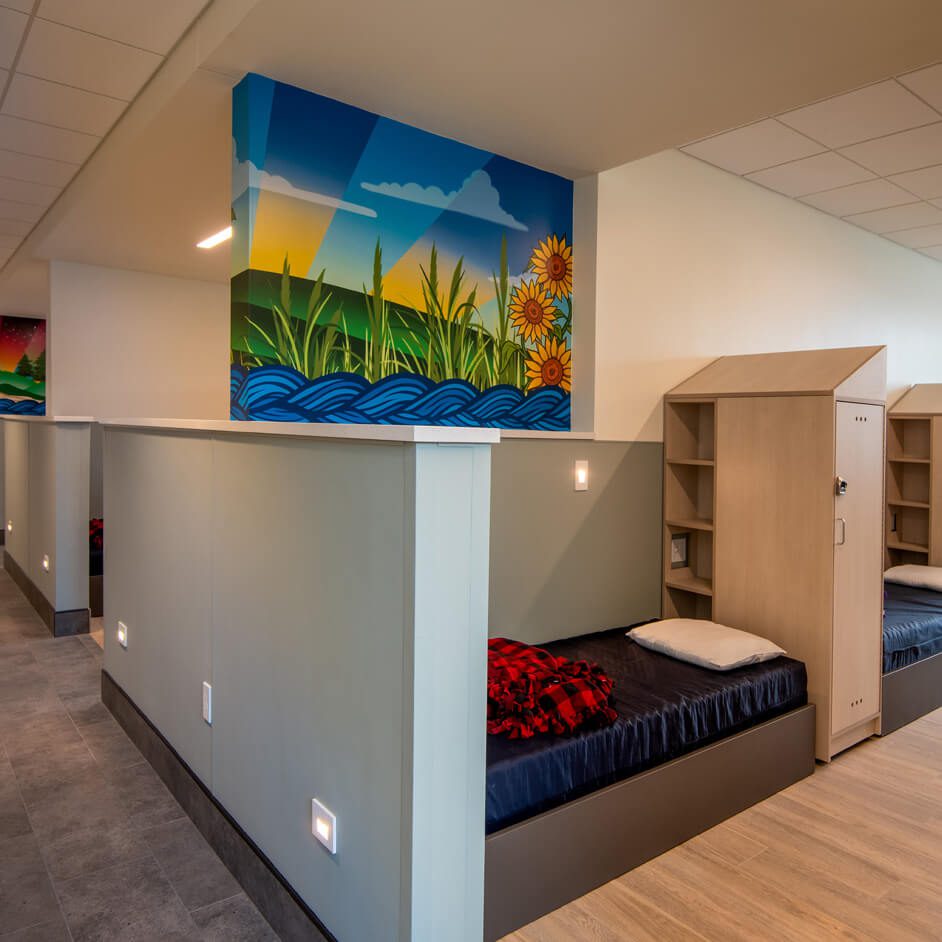
Shelter sleeping areas are organized into pods of six beds instead of large dormitories, and no bunkbeds were used. This reduces noise, increases overall visibility, and helps both guests and staff feel oriented and secure. - Personal storage and control
Each bed space includes an individual locker with phone charging. Secure storage supports dignity and reduces anxiety around personal belongings. - Extensive daylighting
Common areas receive natural light wherever possible. Daylight improves visibility, reduces stress, and supports a more humane daily routine. - Clear sightlines without constant surveillance
Staff can see into shelter spaces from shared circulation areas, supporting safety without creating an institutional atmosphere. - Quiet, purpose-specific lounges
Dedicated spaces — including a women’s lounge located in a sunny, calm corner of the building—offer choice and refuge for guests who need quieter environments. - Outdoor space that feels safe
A secure courtyard provides access to the outdoors without placing guests in highly visible or vulnerable public-facing areas. - Manageable scale
The number of people served on site was intentionally capped. This allows staff to know the individuals in the building and supports a more relational model of care.
Each of these decisions responds directly to how people experience shelter environments, especially those who have lived with instability or trauma. In fact, we believe trauma-informed design principles can strengthen any environment by improving clarity, comfort, and dignity. In shelters, those principles are especially vital.
Design that improves real lives
For the LHB design team, working on this project reminded us why talking directly with a wide range of people is so important to designing shelters that benefit everyone. Shelter guests were able to articulate what made spaces feel unsafe, chaotic, or dehumanizing. They told us what put them at ease and made them feel welcome. Taking those perspectives seriously led us to design decisions that were simply smarter.
Trauma-informed design principles can strengthen any environment by improving clarity, comfort, and dignity. In shelters, those principles are especially vital. ∎
Curious how trauma-informed design could benefit your next project? Contact Michelle Pribyl, co-lead of LHB’s housing studio, at Michelle.Pribyl@LHBcorp.com.